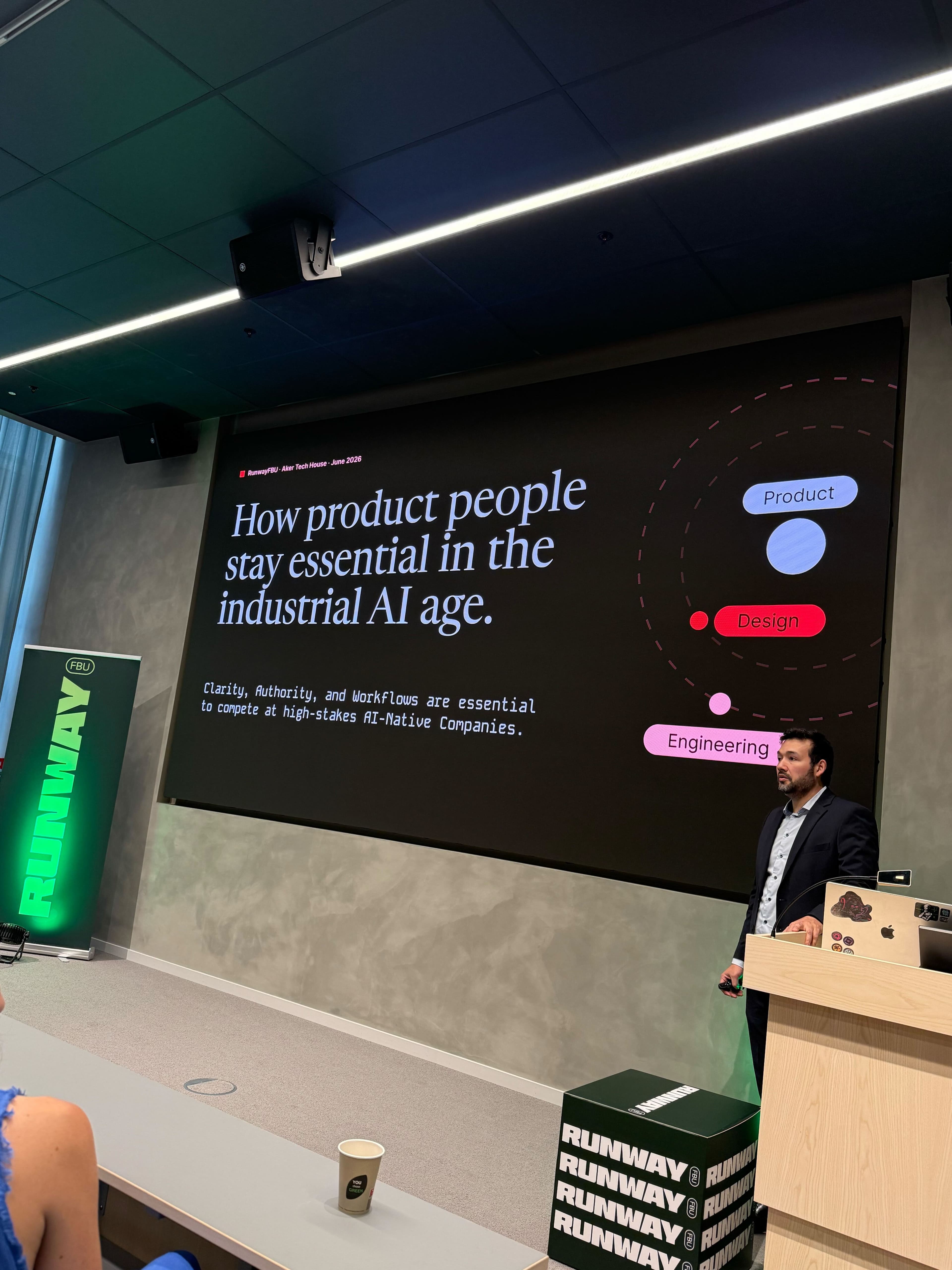
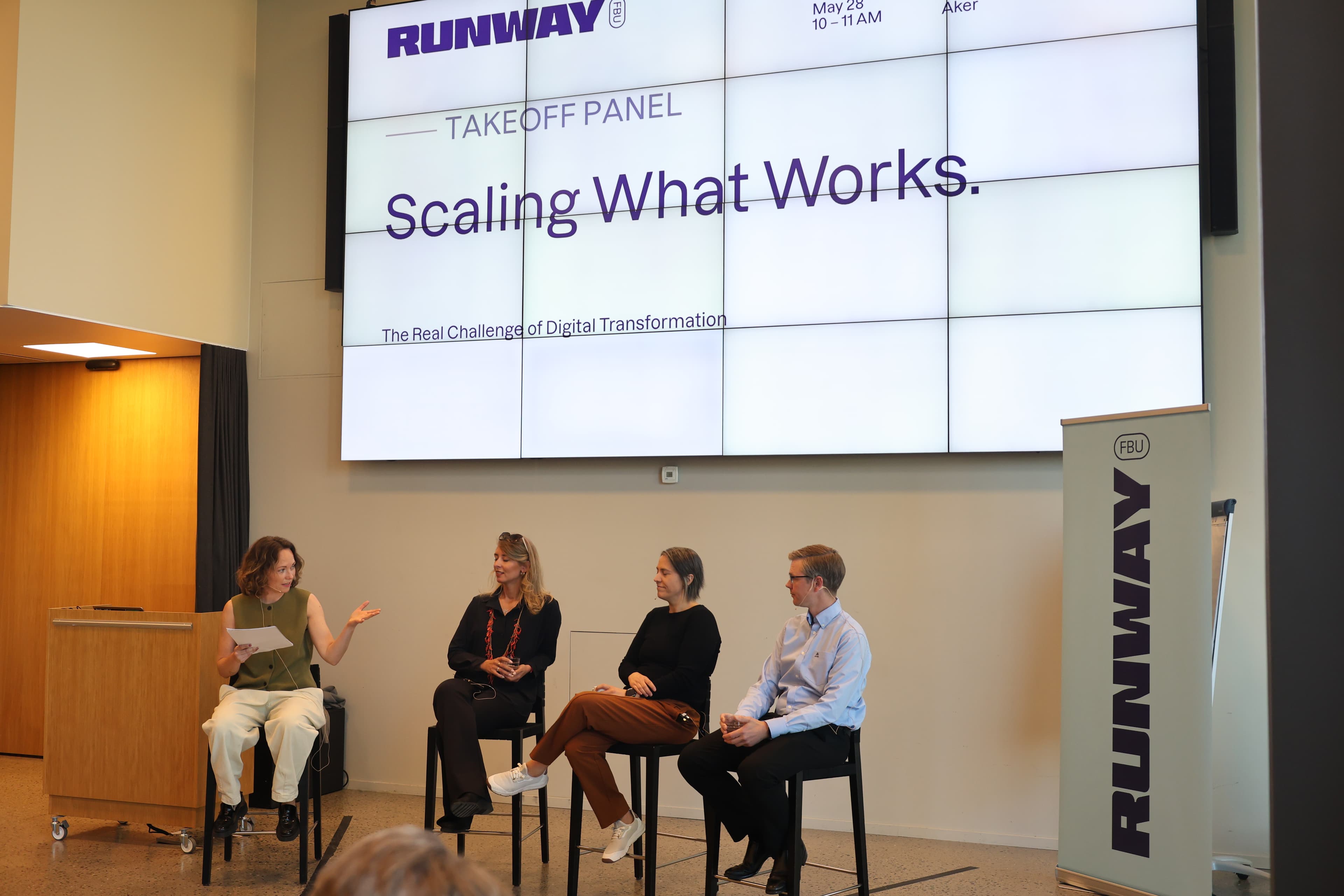
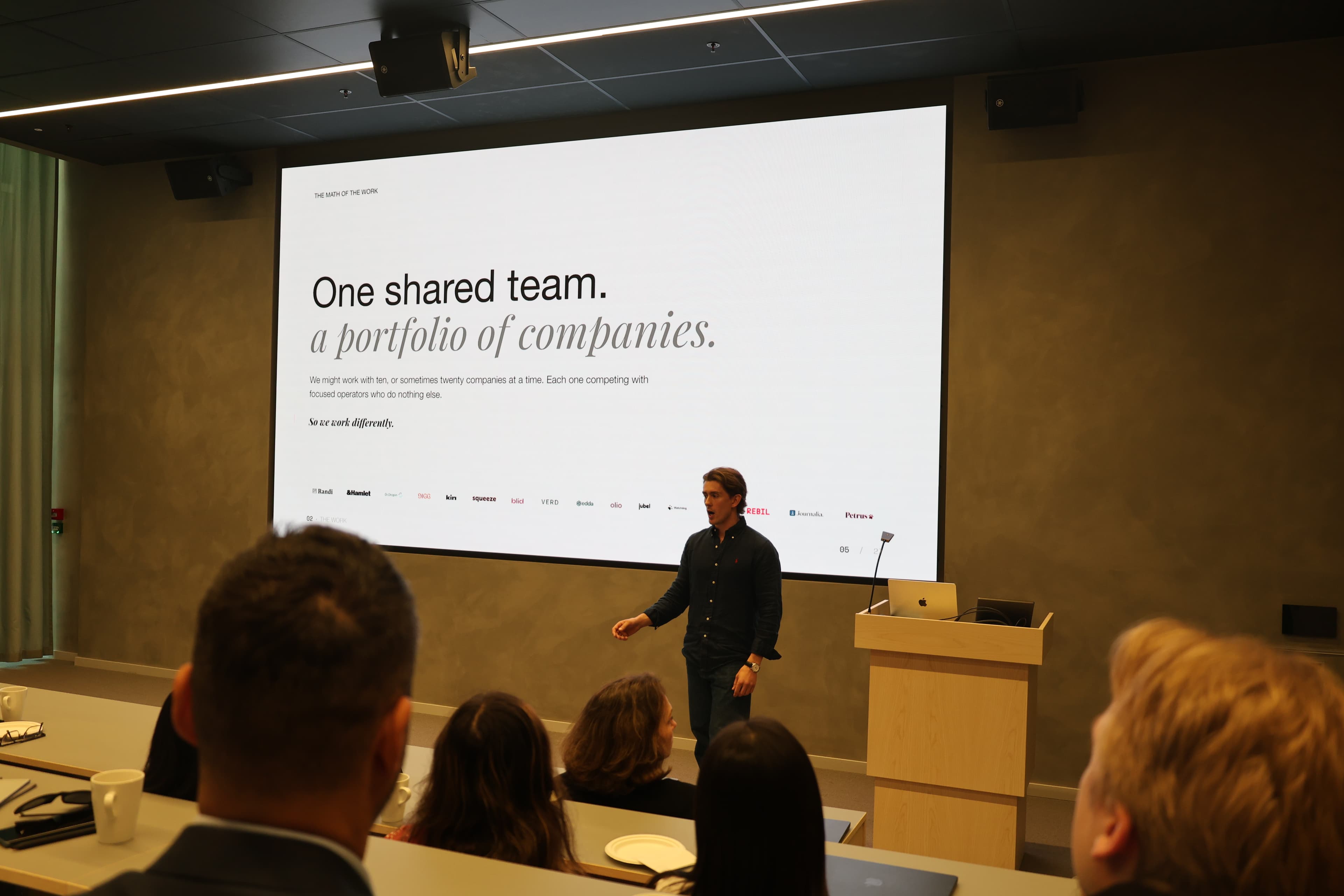
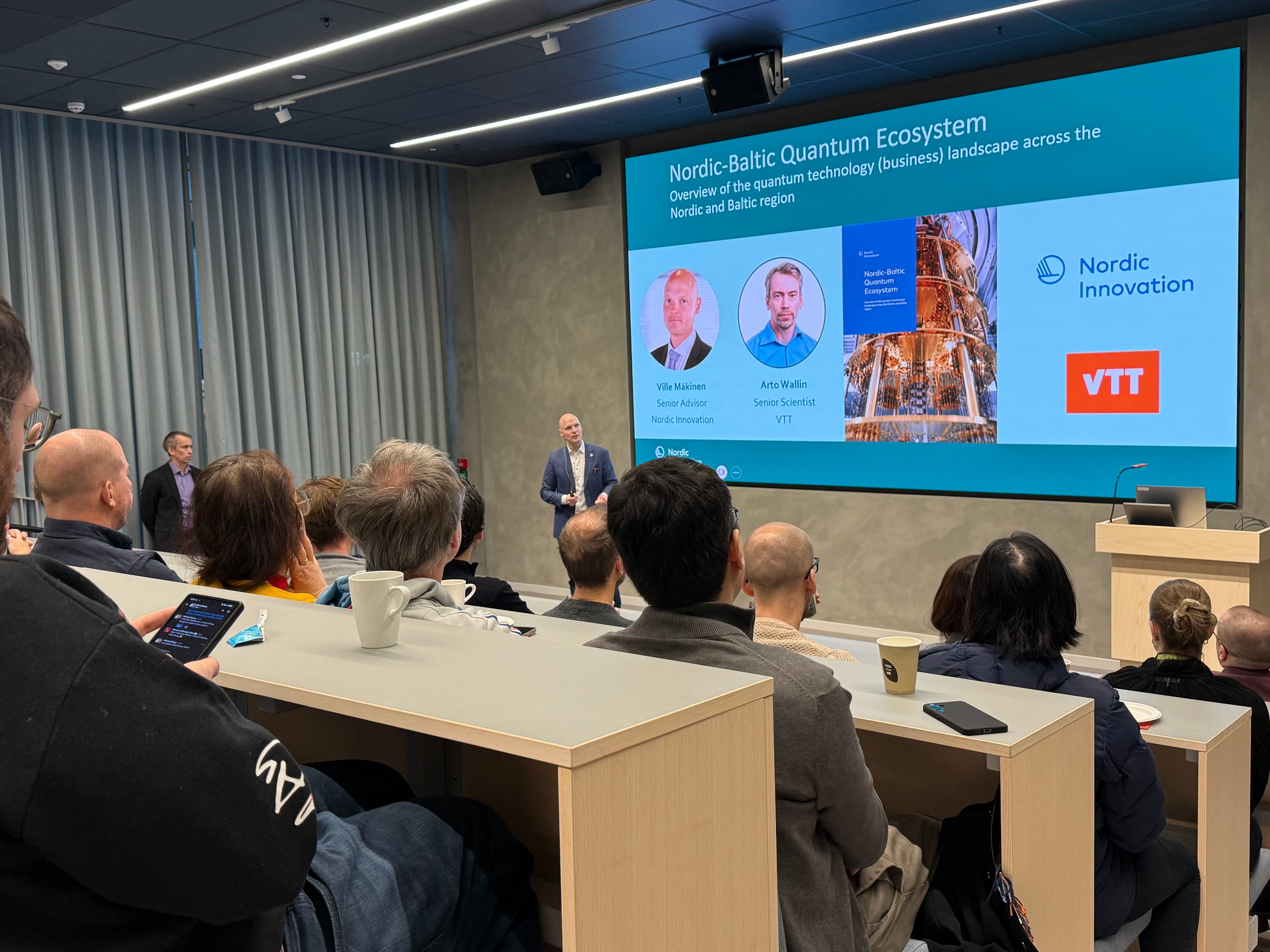
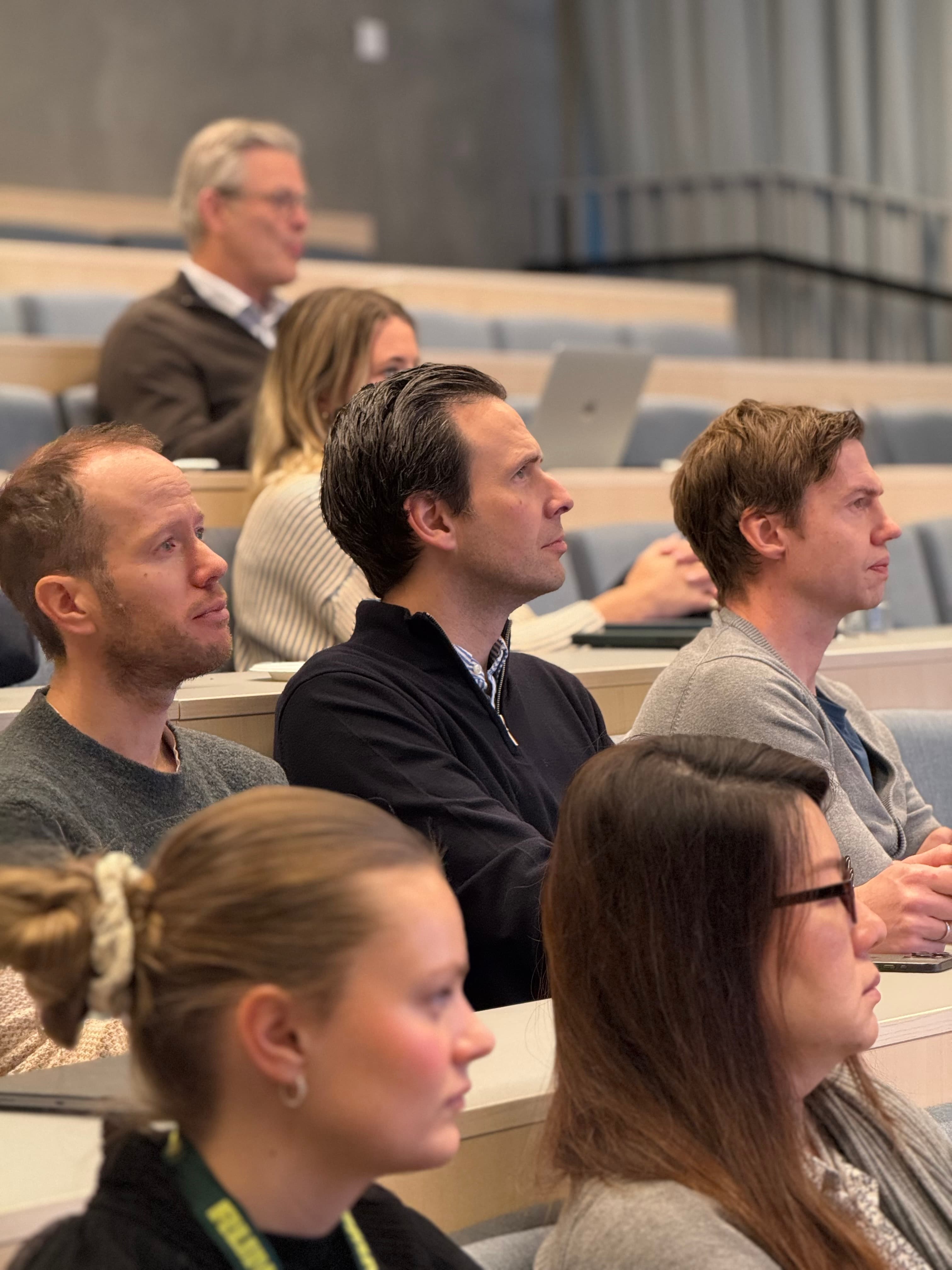
On a December morning at Aker Tech House, Takeoff Tuesday lifted off with a brave crew of founders, operators, investors and curious minds. The mission was simple to say and hard to actually do. Make quantum technology understandable and useful for normal people who do not live inside a lab.
Quantum in one coffee break
Our guides were Ville Mäkinen from Nordic Innovation and Arto Wallin from VTT Technical Research Centre of Finland. Together they gave the room a fast tour of what quantum tech really is, why the global race is so intense, and where Nordic companies can find a real edge.
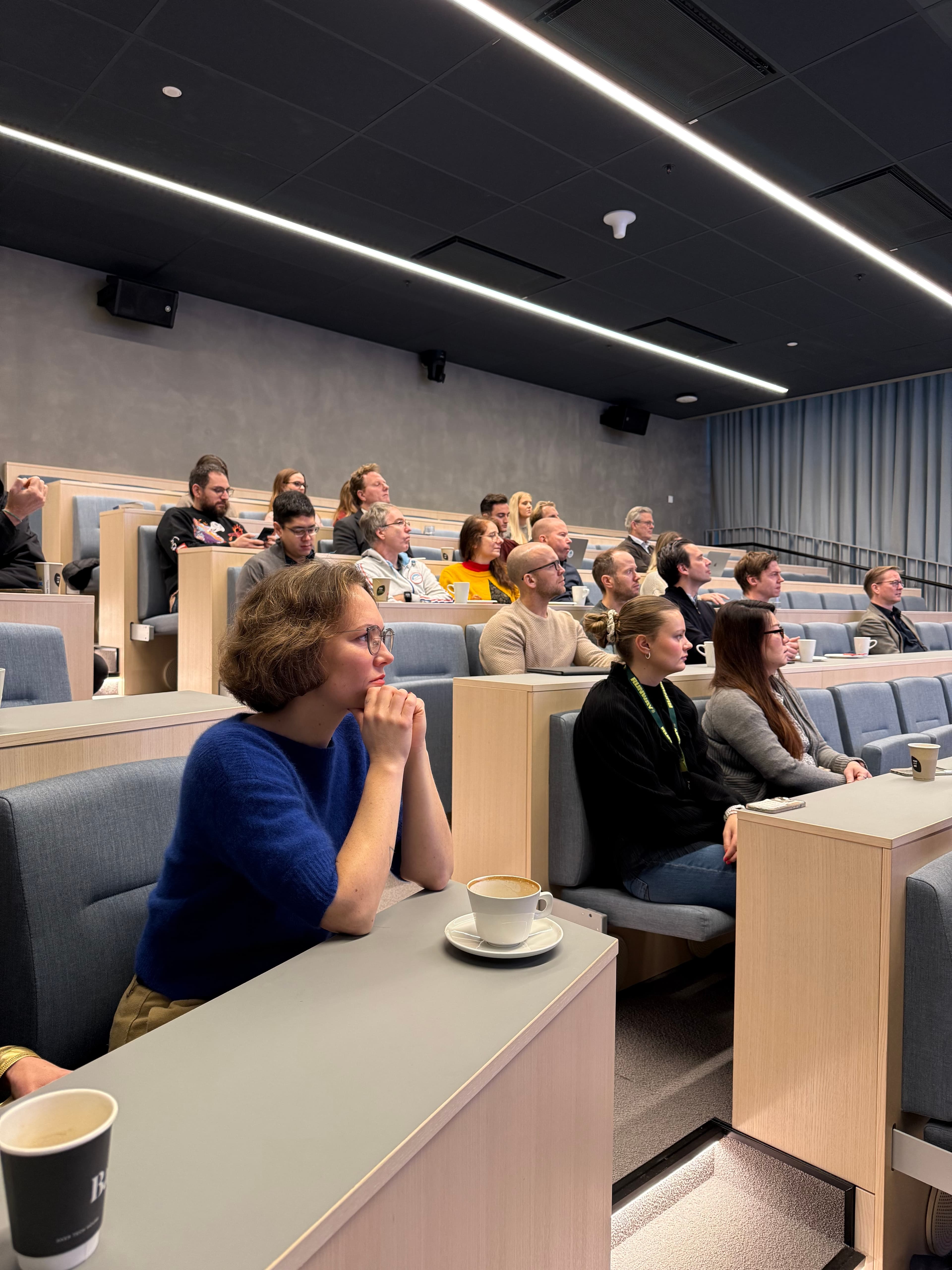
Here is the short version with plain language, a few nerdy moments and some practical tips you can use already this year.
Forget the movie version for a moment. Quantum is not time travel or magic tunnels. At its core it is a new way of using the rules of nature to compute, communicate and measure.
Arto put it in simple terms. There are problems that classical computers can handle and problems that they simply cannot. Quantum computers attack some of those impossible or painfully slow problems.
- Quantum computing
This is the famous one. Instead of regular bits that are zero or one, quantum bits can be in several states at once. For some tasks that gives a massive speed up. Examples are breaking current encryption, simulating molecules for new materials or medicines, and crazy hard logistics and routing problems. - Quantum sensing
These are tiny devices that use quantum effects to measure things with extreme precision. Think better medical imaging, navigation that does not depend on GPS, and tools that can sense what is under the ground or the sea without digging. - Quantum communication
Here the goal is ultra secure communication. With quantum key distribution, if anyone tries to spy on the line, the system notices instantly. In a world with rising cyber threats and tense geopolitics, this is a very big deal.
So is quantum just a faster computer?
Not really. A quantum computer is not a stronger version of existing supercomputers. It is a different kind of machine that is fantastic for some problems and useless for many others. The smart play is to combine it with regular supercomputers so each does what it is best at. That is why people talk about hybrid quantum computing.
Things are still early. There are different hardware approaches racing each other. Superconducting circuits, trapped ions, neutral atoms, photon based systems and more. No one knows which one will win or if there will even be one winner at all. What matters for business today is not betting on the perfect chip. It is learning how to use these machines once they become useful at scale.
And here is a fun twist. You do not need exotic languages to start. Many quantum tools use Python and you can play with real devices in the cloud from providers like IBM. That is today, not ten years from now.
Why the big countries are pouring in billions
One example from Arto landed well in the room. Modern encryption on the internet relies on the fact that some math is insanely hard for classical computers. If you make the keys long enough, breaking them takes longer than the age of the universe. Quantum computers change that game.
A strong enough quantum computer could in theory break widely used encryption in about a week instead of many trillions of years. That is one reason the United States and China treat quantum as a strategic technology.
There are other high stakes use cases:
- Designing new batteries and materials.
- Finding better medical drugs faster.
- Optimizing fleets, grids and supply chains.
- Running energy hungry workload more efficiently.
- For the Nordics, where energy, materials, finance, transport and deep tech are already strong, this is not an abstract topic. It is potential competitive advantage.
Where the Nordics stand today
The honest answer is both impressive and a little scary.
On the plus side, the region already has serious players.
- Finland hosts one of the largest quantum computers in Europe at VTT, built by the startup IQM. There is also a world class company that builds the cooling systems these machines need.
- Denmark has a great ecosystem thinking, strong research in quantum optics and life sciences backed by very serious foundations.
- Sweden has big long term investments through the Wallenberg ecosystem and a lively deep tech startup scene.
- Norway has strong industry that cares about sensing, navigation, energy and security plus a growing interest in quantum software.
There is also activity in the Baltic region and a lot of research talent across universities.
The scary bit. The global race is heating up. Big countries have already committed billions. Europe is building secure quantum communication networks across many member states. In several areas the Nordics are still in the small bubble stage on the global map.
Nordic Quantum Collaboration
Ville and Arto were clear. A small country cannot win this race alone. The only realistic way forward is Nordic collaboration and focused bets.
What Nordic Innovation is actually doing is not just talk and pretty slides.
Nordic Innovation and VTT has mapped the Nordic and Baltic quantum business landscape, spoke with leading stakeholders and identified the path forward together - which are aligned with a declaration from Nordic heads of state that quantum is a shared priority. Based on that, they recommend three big moves.
- Clear leadership and structure
Find a practical way to coordinate quantum collaboration across the region. Use existing institutions rather than building everything from scratch, but make it clear who does what so effort is not scattered. - Real cross border pilots
Get large companies, startups and researchers to work together on practical pilots. For example better navigation for ships, smarter materials for energy, or secure communication for critical infrastructure. Pilots turn hype into learning and real use cases. - Money with a mission
Mobilize public and private capital so that promising projects can scale and the best companies stay in the region instead of moving abroad. Nordic Innovation already has calls open where quantum projects can apply if they prove Nordic value-add for businesses.
What this means if you are a founder or operator
If you are building in energy, mobility, industry software, finance, health or security, quantum will touch your world. Maybe not this quarter, but likely within your career. Here are some practical moves you can start on without blowing your budget.
- Learn just enough to be dangerous
You do not need a PhD but you do need basic literacy. Read a guide like Arto’s book Quantum computing guide for industry leaders | VTT Research, or follow a trusted intro series. Aim to understand what quantum is good at and what it cannot do. That alone will save you from a lot of hype and bad sales pitches. - Map one or two possible use cases
Look at the hard problems in your company that involve complex optimisation, simulation or security. Ask a simple question. If quantum worked tomorrow, where could it create new value or save serious cost. You are not committing to build anything yet. You are building a radar. - Play with real tools
Send one curious engineer or data person to try a small quantum experiment in the cloud. IBM Qiskit is a good starting point and uses Python, so the barrier is low. The goal is learning, not production ready systems. - Connect with the Nordic ecosystem
Join relevant meetups, programs and pilot calls across the region, not only inside your country. A startup in Oslo might find its best hardware partner in Helsinki and its first pilot in Copenhagen. The report from Nordic Innovation gives a useful map of who is doing what. Nordic-Baltic Quantum Ecosystem | Nordic Innovation - Think talent early
If you have people in your company who care about quantum, give them room to explore. If you are in academia and want to move into business, keep an eye on emerging Nordic companies in the quantum field – throughout the whole quantum technology value chain. The worst outcome is training great people and quietly watching them leave the region.
A friendly reality check
Quantum is not going to replace classical computing. It will not magically fix every hard problem in your backlog. It will not save a broken business model.
What it can do is open a new toolbox for some of the toughest problems in energy, materials, security and optimisation. For the Nordics, with strong industry and high trust between countries, this is a rare chance to punch above our weight.
At RunwayFBU we like to say that industry is where the real action is. Quantum fits that story perfectly. The companies that start learning and experimenting now will be ready when the wave gets bigger. The ones that ignore it may wake up to find that their competitors are running on very different rules.
So the next time someone mentions qubits at lunch, do not roll your eyes. Ask what they think it could mean for batteries, for ships, for grids, for ports, for finance, for health.
That is where the real quantum reality check starts.