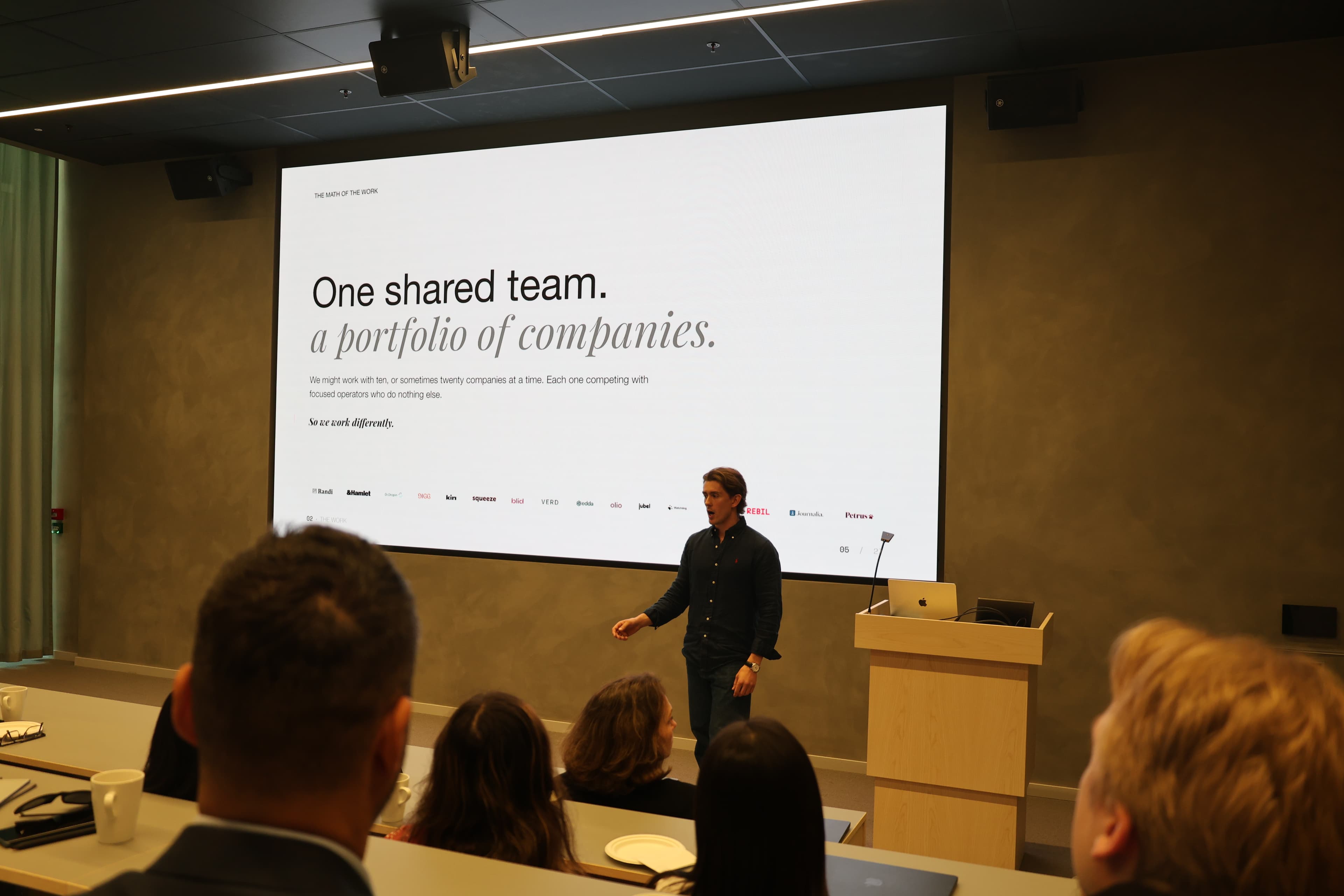
At our latest Takeoff event, we invited Askeladden to RunwayFBU to share how they build companies, how they work across a portfolio, and what their operating model does to the people inside it.
The session was not really about “tech” in the narrow sense. It was about company building. More specifically, it was about how speed, judgment and ownership become a system.
Askeladden’s track record gives the topic some weight. Since starting with Cutters in 2015, they have launched around 30 companies, with roughly 70% still operating. Across the portfolio, excluding Cutters, they described around NOK 3 billion in annual revenue, more than 1,500 employees, more than 2 million customers served annually, and an average NPS above 80.
But the most interesting part was not the numbers. It was how they got there.
The enemy is syrup
One of the strongest ideas from the session was what Askeladden calls “syrup”.
Syrup is what happens when a company starts to slow down. Decisions get postponed. Teams “sleep on it”. Problems are discussed instead of solved. Workshops replace action. Ownership spreads so thin that fewer people feel responsible for the whole product or the whole company.
The dangerous part is that syrup often looks professional. Roadmaps, processes, refactors, decision layers and long discussions can all sound sensible. But for startups, slow does not just mean slow. It can mean missing the thing that mattered.
Askeladden’s argument was simple: most initiatives in a startup will not matter much, but a few can matter enormously. That means teams need both the speed and the courage to test more things, faster.
Build for the company you have
One principle stood out clearly: build for the company you have, not the company you wish you had.
That does not mean lowering standards. It means matching the solution to the stage, constraints and actual problem in front of you.
The example of Digg Pizza made this tangible. Under capital constraints, Askeladden could not justify building the full ordering system they ideally wanted. Instead, they found a scrappier way to deliver the customer experience they needed, even if the backend made engineers itchy. The point was not whether the infrastructure was beautiful. The point was whether customers could order easily and get great pizza.
That bet helped the company keep moving. Later, when the company had earned the right to scale, they could pay down the technical debt and build a more complete omnichannel system.
It is a useful reminder for startups: technical debt is not automatically bad. Technical debt without learning is bad. Technical debt that buys speed, validation and survival can be the right trade-off.
Own the P&L, not just your initiative
Another key theme was ownership.
Askeladden expects tech leads, marketers and operators to think beyond their own function. A tech initiative is not good because it is technically elegant. It is good if it moves the company forward.
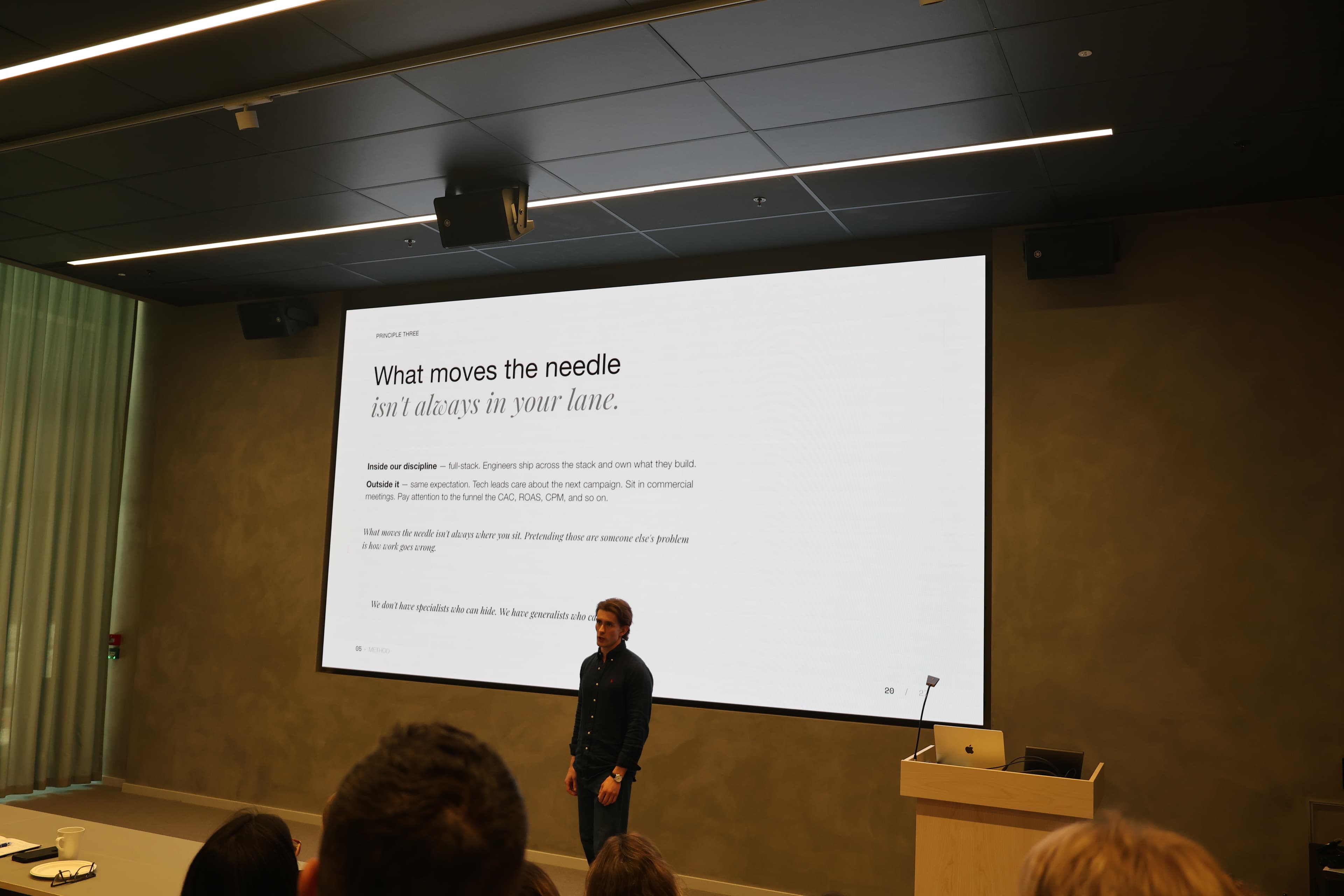
One speaker shared a story from early in his time at Askeladden. He had prepared a polished pitch for rebuilding an old codebase. It had risks, timelines and technical arguments. The response in the room was blunt: how does this move the needle?
That question changed how he pitched tech work. The next initiative was framed around increasing utilization, improving booking availability and driving top-line growth. Same function, very different mindset.
This is the difference between optimizing your code and optimizing the company.
For founders and teams, that is a useful test: can every major initiative be connected to revenue, utilization, churn, customer experience, cost, speed or learning? If not, it may be motion, not progress.
Generalists all the way down
Askeladden also challenged the idea that people should stay neatly inside functional lanes.
Inside tech, they prefer full-stack profiles where possible. But the broader point was more important: people should understand the business outside their discipline. A tech lead should care about the financial situation, marketing initiatives, partner deals, CAC, ROAS and the real drivers of the business.
The phrase that landed was that they do not only want generalists “back in tech”. They want generalists overall.
That does not mean everyone does everything. It means everyone understands enough to make better decisions for the company, not just for their function.
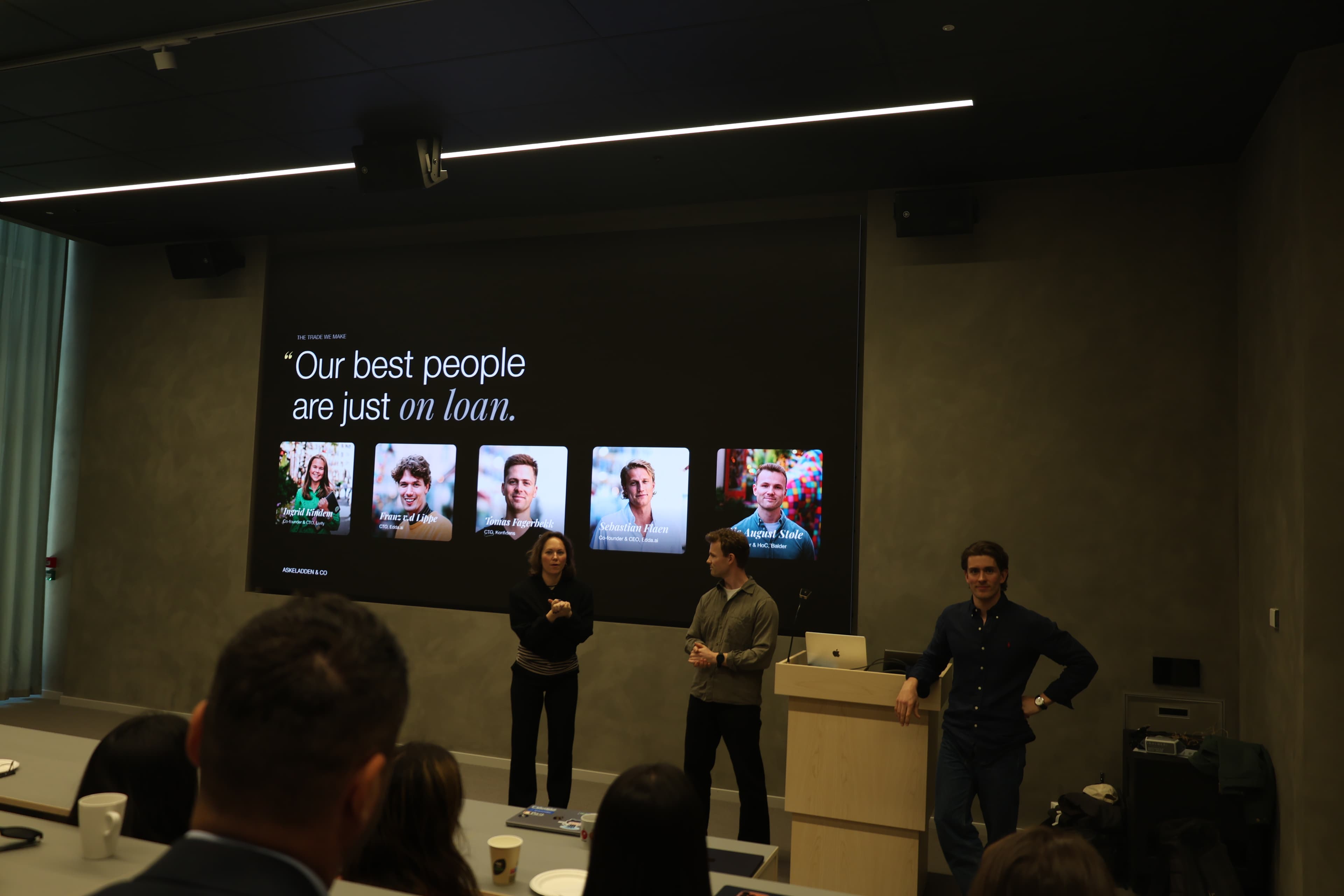
Kill what is working, if it is no longer right
Perhaps the hardest principle was this: kill what is working, even if it is yours.
Startups need grit, but grit and stubbornness are not the same thing. Sometimes the hardest call is not to quit when things are difficult. It is to stop doing something that is sort of working, but no longer points in the right direction.
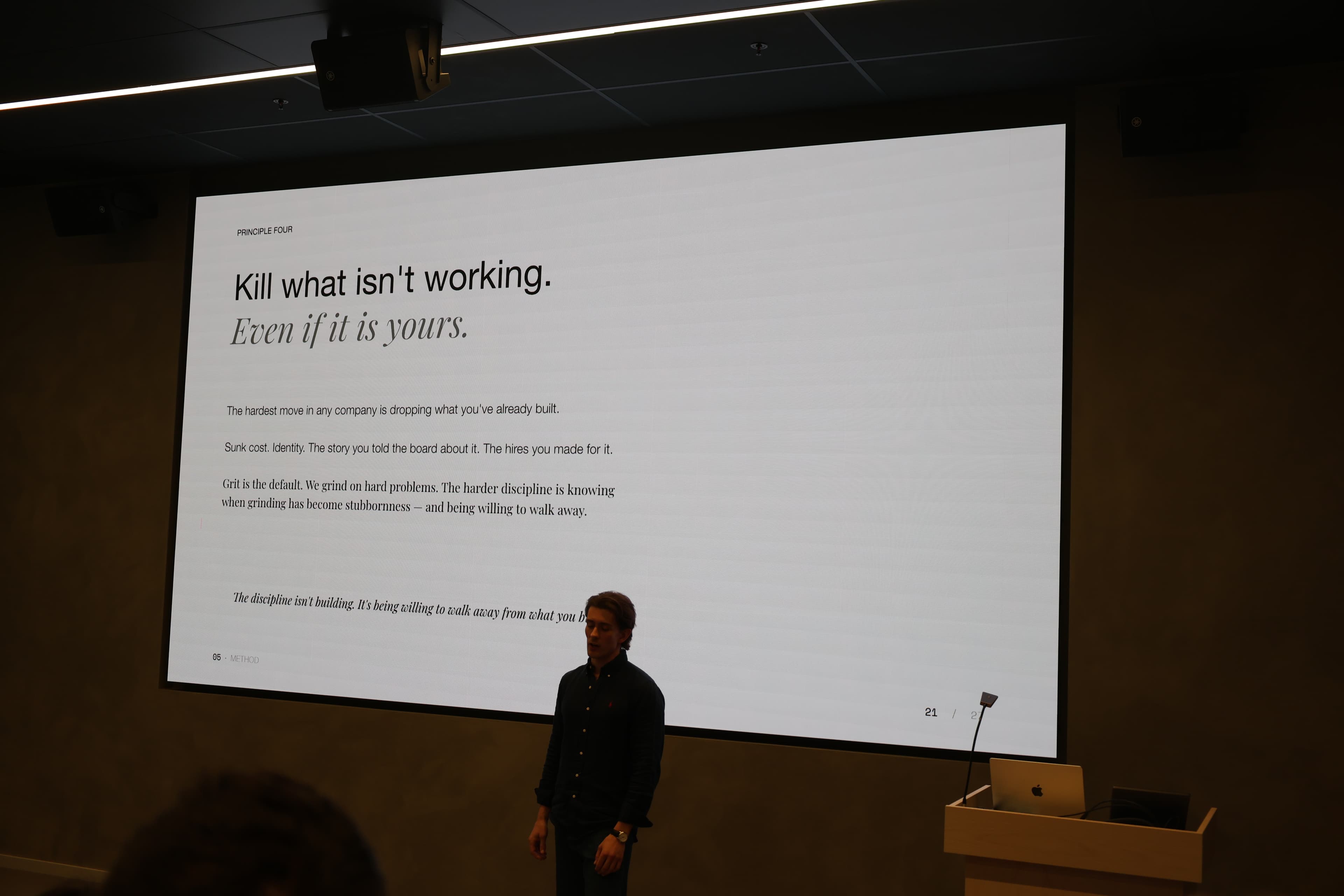
The example shared was an entertainment concept that started as a social gathering place in mid-sized Norwegian cities, but drifted into becoming more of a party venue, with operational problems, low margins and staff burnout. Askeladden chose to shut it down, take a significant sunk cost, and pivot.
The same team then moved toward a stronger concept, with simulator golf, better locations, larger markets and more focused investment. The new direction became profitable and continued growing.
The lesson was not “kill faster”. It was more precise than that: do not protect what you have built just because you built it.
Scrappy and shipped beats elegant and delayed
The second part of the session brought the lessons into a new context: a former Askeladden tech lead now building a startup in shipping-container monitoring.
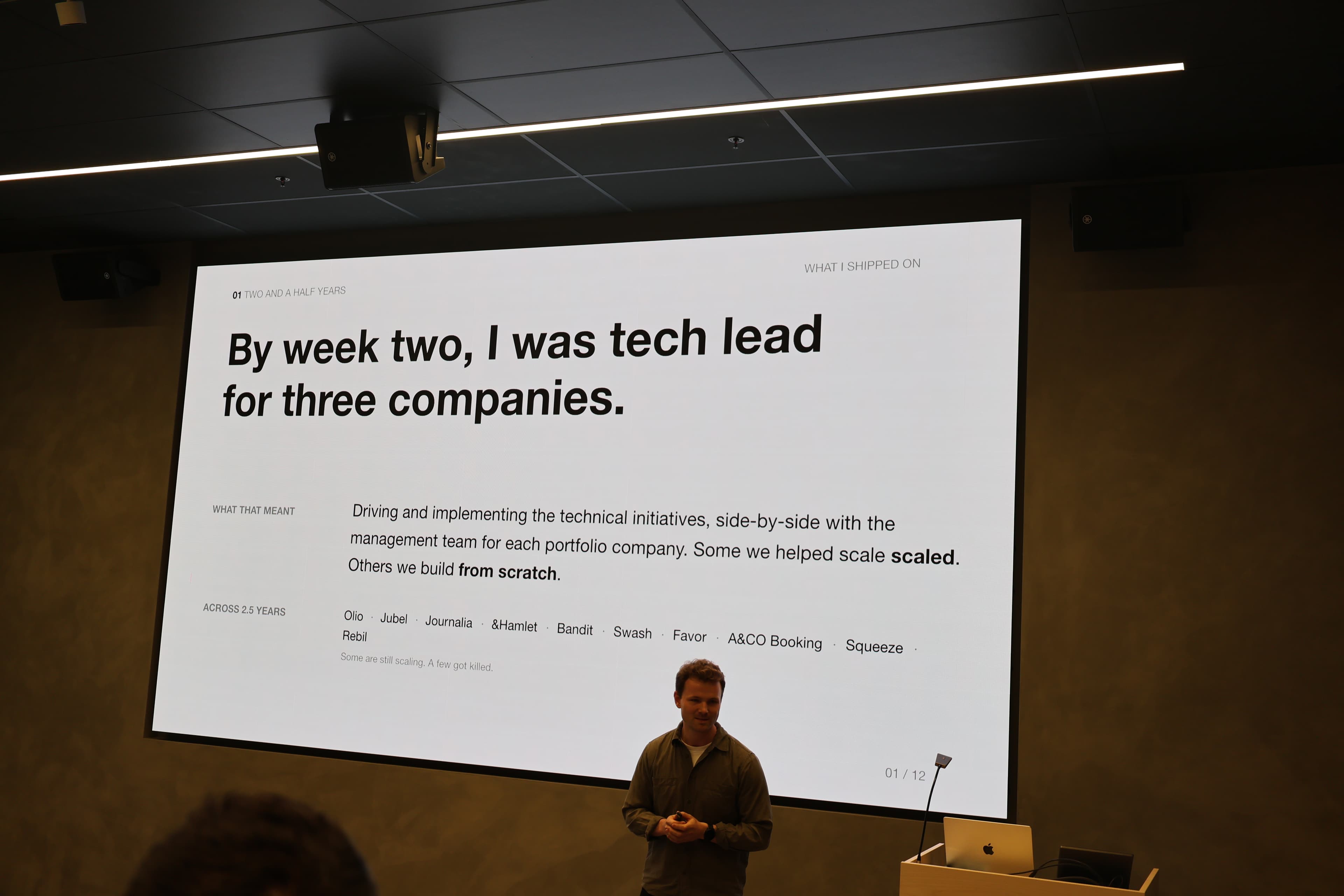
The industry problem is large. There are millions of dry containers moving around the world, but only a small share have tracking or monitoring attached. Empty container movement and theft represent large costs. The startup is building end-to-end hardware, firmware and software in Oslo, with pilots already live.
The most memorable line from this part was that “scrappy and shipped beats elegant and delayed” almost every time.
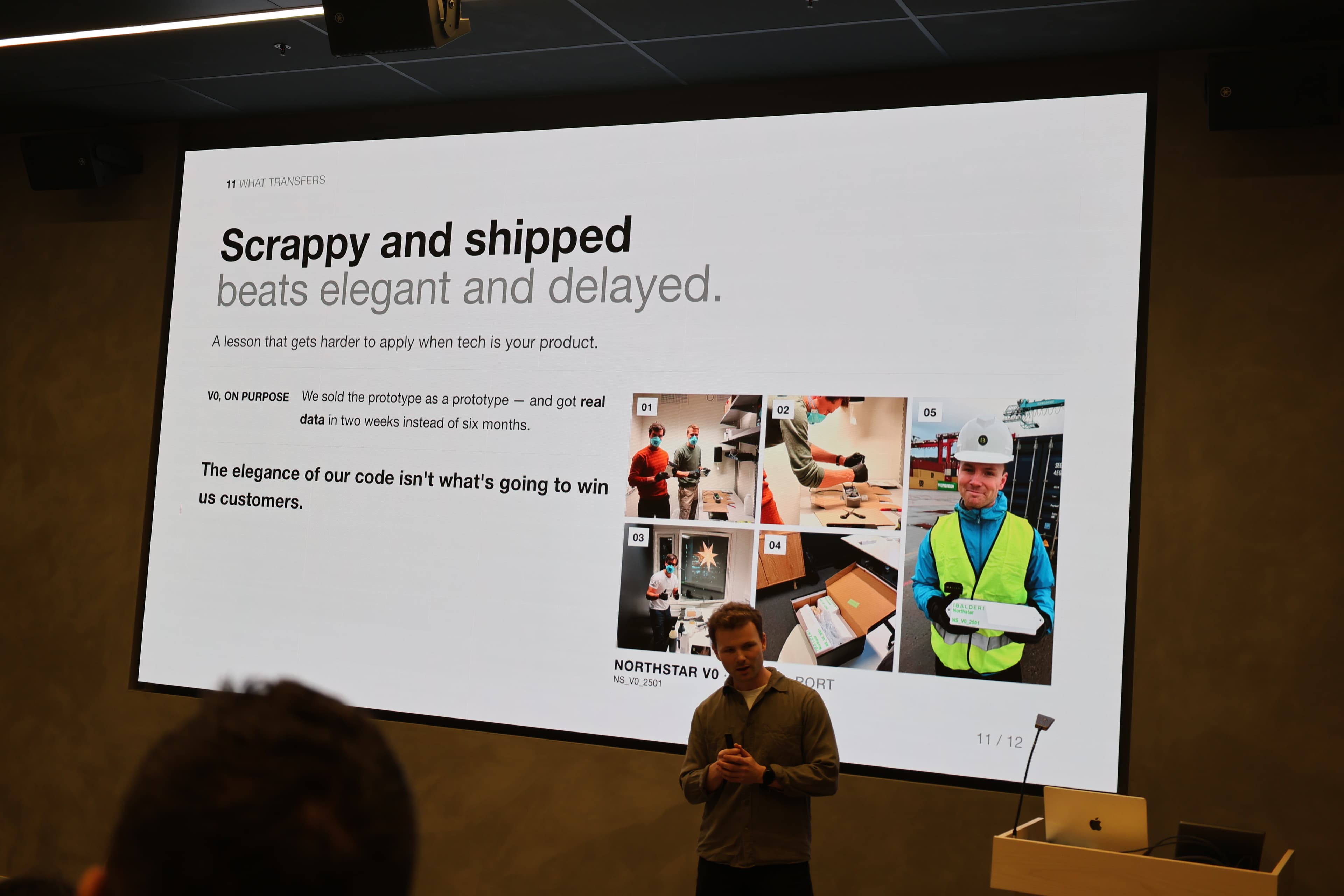
Their first prototype was not pretty: a 3D-printed case, a basic PCB, an evaluation card, an external power source and a very hands-on installation. But the point was not beauty. The point was learning. In two weeks, they learned things that might have taken six months with a polished version.
That is especially relevant for deep tech and industrial startups. Customers often do not care what the architecture looks like underneath. They care whether the product solves the problem, works reliably, stays safe and creates value.
The takeaway for founders
The session left us with a few sharp reminders:
- Build what the company needs now, not what your ego wants to build.
- Measure initiatives by business impact, not functional comfort.
- Create systems where people take ownership beyond their job title.
- Use data, customer feedback and end-to-end testing to validate direction.
- Be willing to kill, pivot or rebuild when the facts change.
And above all: keep moving. In startups, judgment matters more than motion, but without motion there is nothing to judge.
That is why Takeoff exists: to bring practical company-building lessons into the room, from people who have actually done the messy work.
This one was a good reminder that startup building is rarely elegant from the inside. It is scrappy, uncomfortable and full of trade-offs.
In other words, exactly as it should be.