Something fundamental is happening in product right now, and most people can feel it even if they struggle to fully articulate it. AI is not just making software faster to build. It is reshaping how products get made, how teams collaborate, and which roles create the most value.
At our latest Takeoff session, we sat down with Daniel Arevalo from Omny to unpack what this shift actually looks like, especially in industrial environments where complexity is high and mistakes carry real consequences.
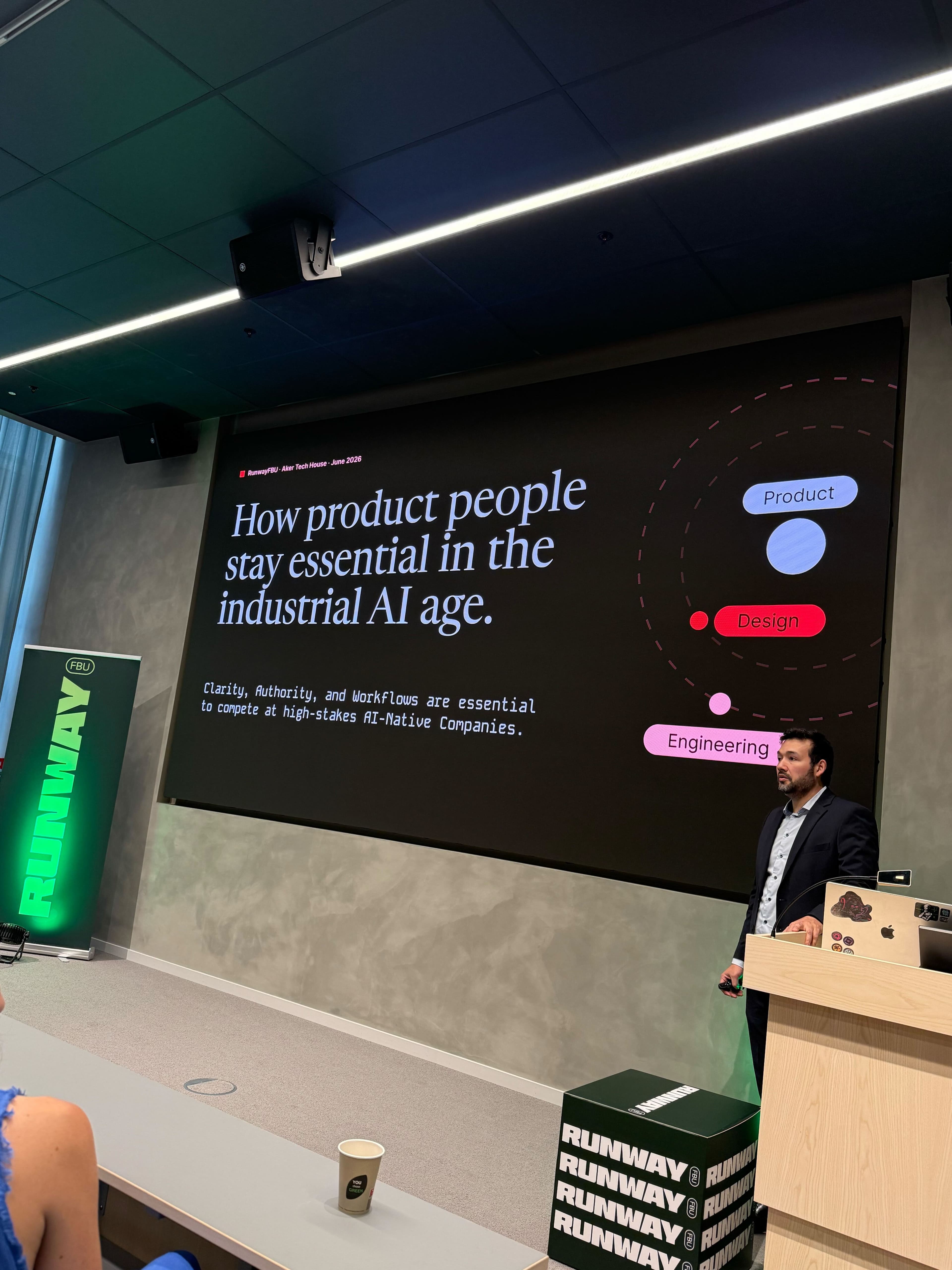
He with a provocative claim: the AI “jobpocalypse” is not really about replacement. It is about collapse. More specifically, the classic product triangle of product manager, designer and developer is starting to collapse in on itself.
The triangle is collapsing
For years, product teams have been built around a familiar structure. Designers owned usability and experience, developers owned technical execution, and product managers sat in the middle translating between business, design and engineering.
That model made sense when software was expensive to build and slow to ship. AI changes that dramatically.
What used to take weeks can now take days or even hours. Designers can build functional prototypes themselves, developers can explore product decisions earlier, and product managers can synthesize research and feedback at remarkable speed. The distance between the roles is shrinking fast.
Daniel used a great metaphor for this: gravity is crushing the triangle.
As execution moves closer to decision-making, you simply need fewer translators in the middle. That does not mean product disappears, but it does mean product work is changing.
Industrial AI changes the stakes
This shift may sound alarming, but Daniel was clear that it also creates opportunity.
In many B2C and traditional SaaS environments, there may be less demand for classic product roles as we know them. Industrial AI, however, is a completely different game.
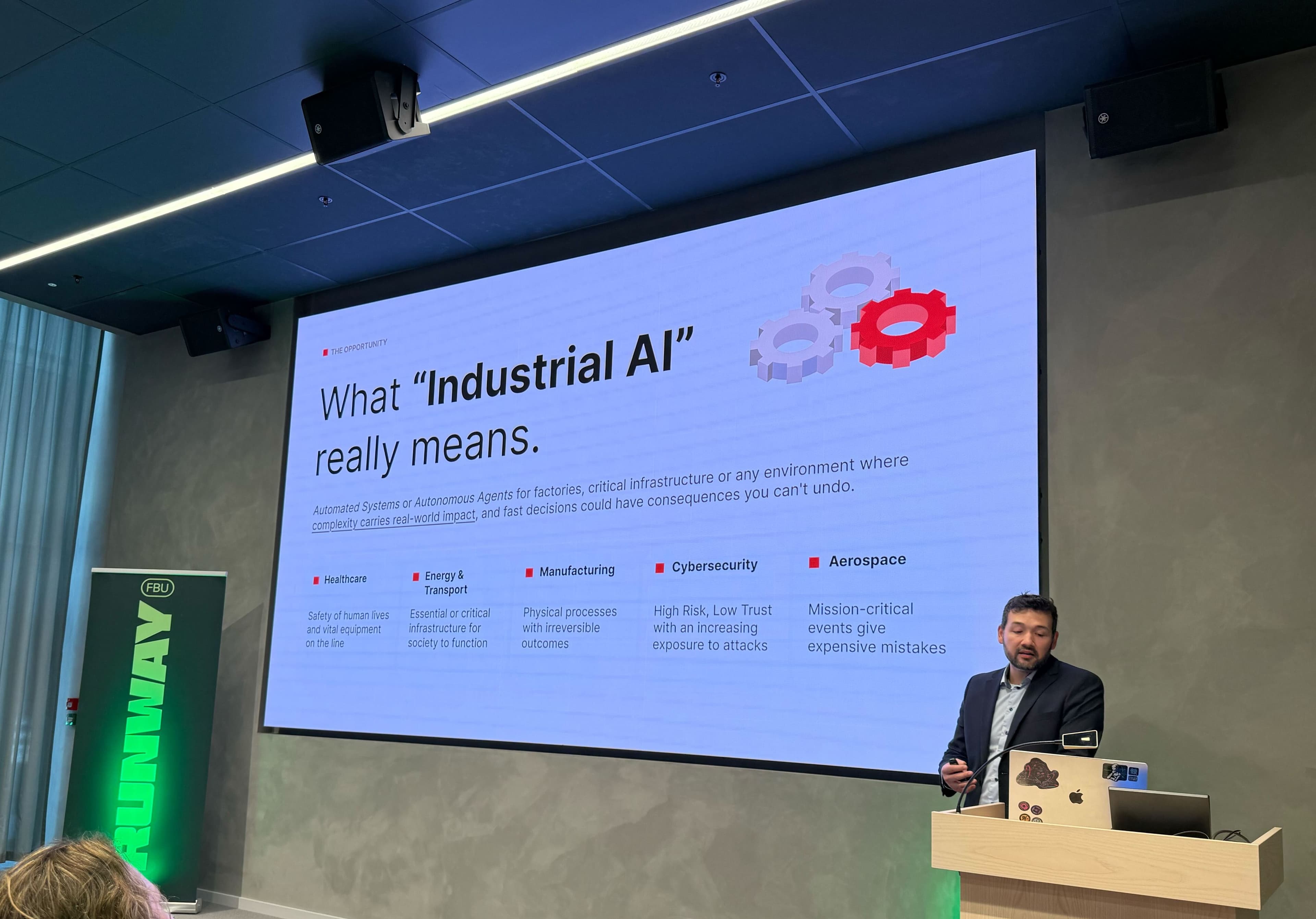
And by industrial AI, Daniel does not just mean factories or heavy machinery. He means any environment where software decisions have real-world consequences, whether that is healthcare, energy, cybersecurity, transportation, manufacturing or critical infrastructure.
In these environments, bad product decisions do not just create frustrating UX. They can lead to financial losses, reputational damage, environmental incidents or, in the worst case, put human lives at risk.
That changes what great product work looks like.
These companies are not simply looking for prettier dashboards or faster sprint cycles. They need people who can operate in complexity, understand systems and make sound decisions under uncertainty.
Judgment is the new scarce resource
One of Daniel’s sharpest observations was that engineering is no longer the bottleneck it once was.
Software production is becoming dramatically cheaper and faster. Prototypes can be generated in hours, AI agents can automate workflows, and code generation tools remove huge amounts of manual work. But this abundance creates a new challenge: just because we can build more does not mean we are building better.
Many teams are now producing more features, tools and prototypes than ever before, often without a clear understanding of whether anyone actually needs them. That is where organizations get trapped, confusing speed with leverage.
As Daniel put it, fast nonsense is still nonsense.
The scarce resource is no longer code, but judgment: the ability to know what actually matters, which problems are worth solving, and where complexity needs to be reduced instead of amplified.
The rise of the product architect
That shift naturally changes who becomes most valuable.
The winners in this new world will not simply be the fastest builders or the loudest AI enthusiasts. They will be the people who combine strong product judgment, technical fluency and deep domain understanding.
Daniel described this as a new archetype: the product architect.
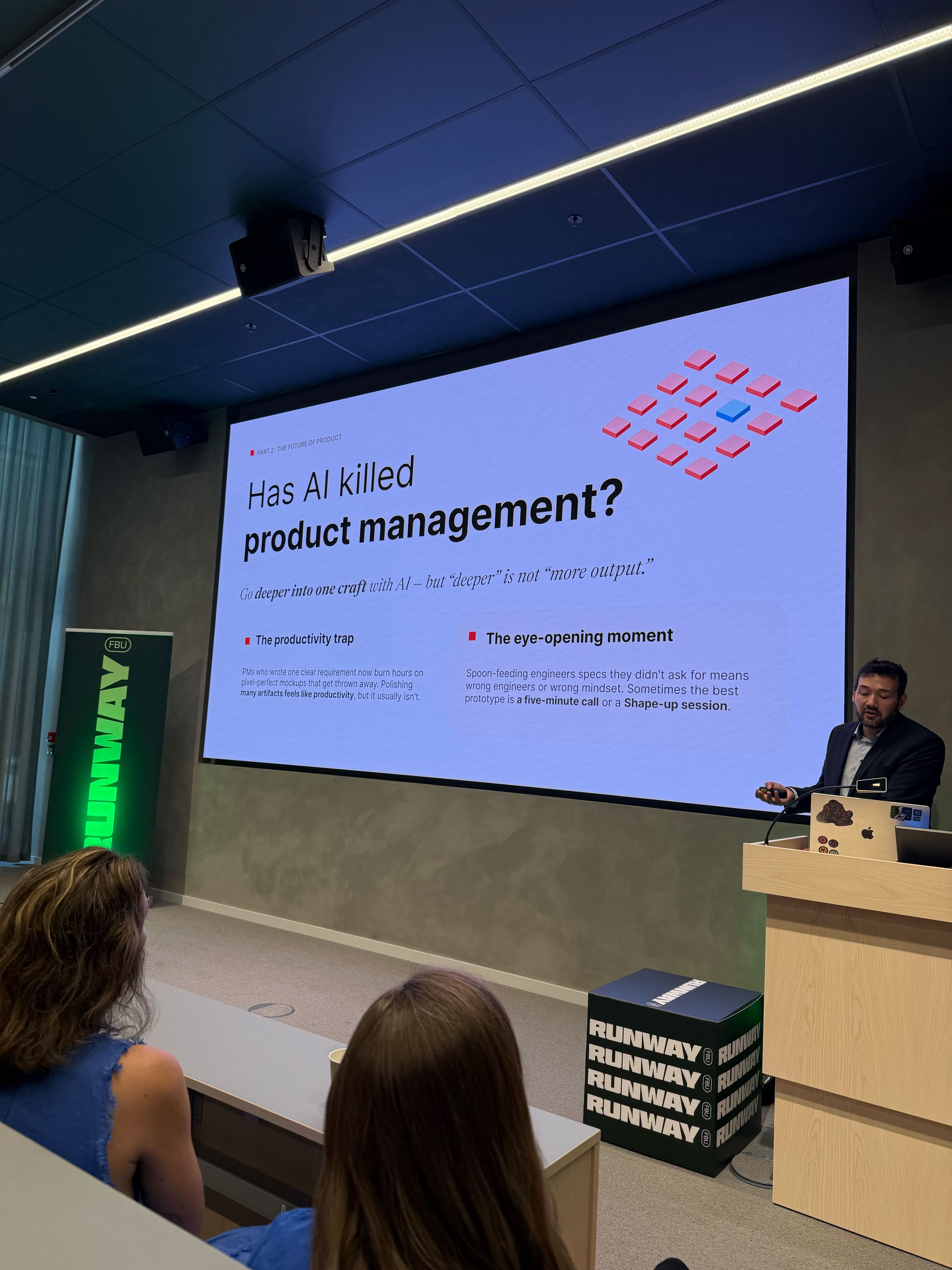
A product architect understands what should be built, why it matters, how it gets built, and what happens if it fails. It is someone who can connect business, design and engineering without living purely inside one of those silos.
That combination is increasingly hard to replace.
Every AI agent needs a human who cares
Someone still has to own the outcome, validate whether the output is good, and know when the system is wrong. That responsibility does not disappear with more automation. If anything, it becomes more important.
Rather than eliminating human value, AI is compressing the middle layer of coordination and handoffs while increasing the importance of judgment at both ends of the workflow. Humans decide what is worth doing and validate whether it was done correctly. AI may power the middle, but human judgment remains essential.
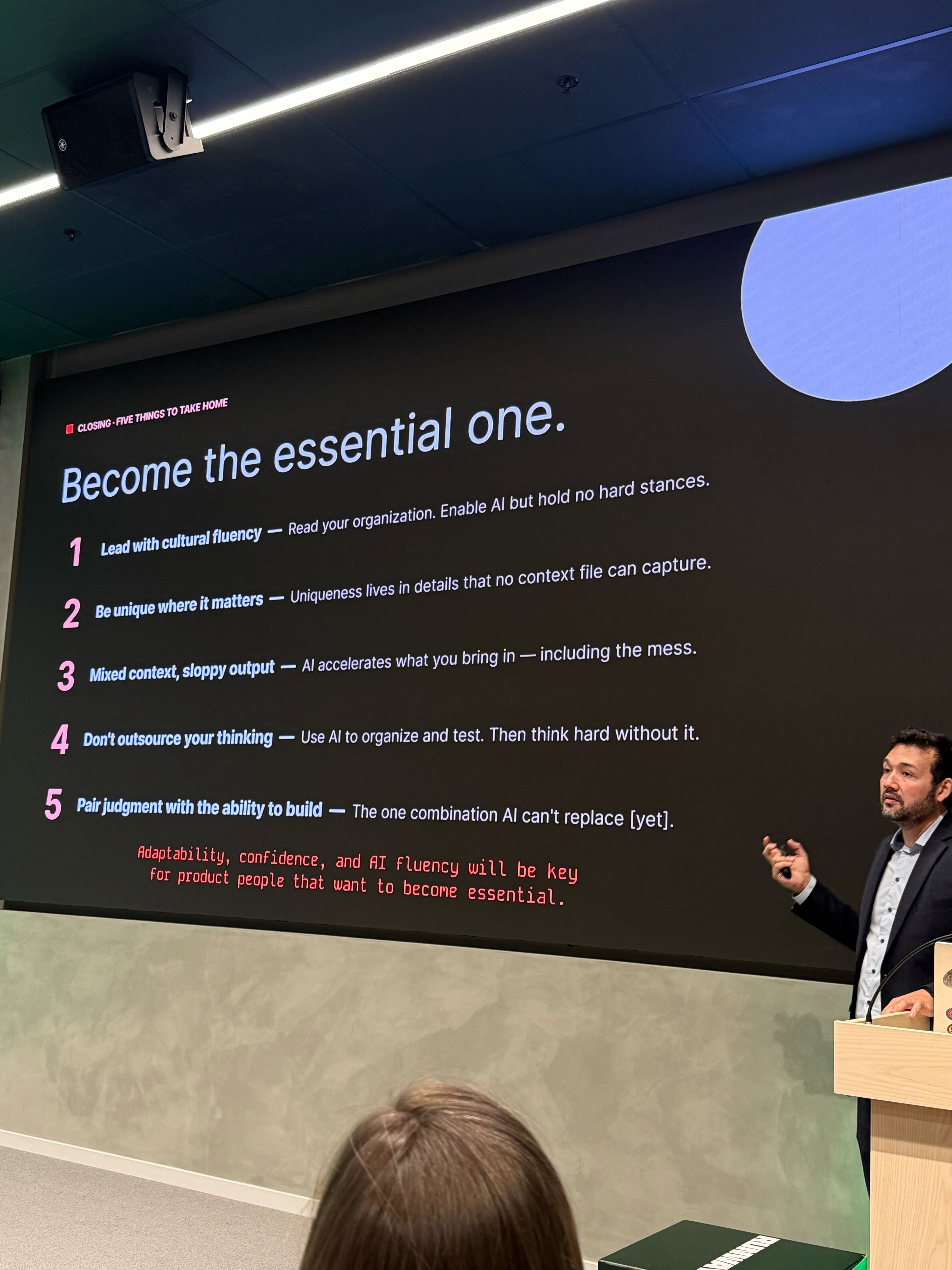
How to become the essential one
Daniel ended with five practical takeaways on how to stay essential in the AI age:
1. Lead with cultural fluency
Understand your organization and enable AI wisely.
2. Be unique where it matters
Your edge lies in taste, judgment and domain insight.
3. Better context = better output
AI amplifies whatever you feed it.
4. Don’t outsource your thinking
Use AI to explore, but keep ownership of understanding.
5. Pair judgment with the ability to build
One of the hardest combinations to replace.
If there was one core message from Daniel’s talk, it was this: the people who thrive in the industrial AI age will not necessarily be the ones who adapt fastest. They will be the ones who understand the shift deeply enough to know where human judgment still matters most.
And that may become the most valuable skill of all.
We wrapped up the session with lunch in our Tech Hub, where the conversations continued well beyond the stage.
Takeoff is now heading into summer break, but we hope to see many of you again after the holidays for more sharp conversations.
We’ll keep you posted.
Every AI agent needs a human who cares
One line from the session especially stuck with me: every AI agent you build needs a human who cares about it.
Someone still has to own the outcome, validate whether the output is good, and know when the system is wrong. That responsibility does not disappear with more automation. If anything, it becomes more important.
Rather than eliminating human value, AI is compressing the middle layer of coordination and handoffs while increasing the importance of judgment at both ends of the workflow. Humans decide what is worth doing and validate whether it was done correctly. AI may power the middle, but human judgment remains essential.